.jpg)
Think First with Jim Detjen
Think First is a short-form podcast that makes you pause — before you scroll, share, or believe the headline.
Hosted by Jim Detjen, a guy who’s been gaslit enough to start a podcast about it, Think First dives into modern narratives, media manipulation, and cultural BS — all through the lens of gaslighting and poetic truth.
Some episodes are two minutes. Some are an hour. It depends on the story — and the energy drink situation.
No rants. No lectures. Just sharp questions, quick insights, and the occasional laugh to keep things sane.
Whether you’re dodging spin in the news, politics, or that “trust me, bro” post in your feed… take a breath. Think first.
Visit Gaslight360.com/clarity to sharpen your BS filter and explore the 6-step clarity framework.
🚨Distorted is now available on Ingram, Amazon, Independent Book Stores, Apple Books, Harvard Book Store & COOP, and Barnes & Noble.
Think First with Jim Detjen
#91 A Year Later · Still Waiting on Justice
Use Left/Right to seek, Home/End to jump to start or end. Hold shift to jump forward or backward.
A year later, many Americans are still waiting — not for vengeance, not for show trials, but for explanation.
This episode of Think First isn’t about indictments. It’s about legitimacy… and what happens when institutions ask for patience, but refuse to explain the delay.
After a year of publicly granted patience, many Americans are asking the same question quietly: Is anything actually happening — and if so, why won’t anyone say so?
We explore why delay can be prudent… but silence is corrosive. Why restraint without communication starts to look like protection. And why trust collapses faster from unanswered questions than from bad headlines.
Along the way, we examine the growing gap between public expectations and institutional communication surrounding issues that have dominated the national conversation — including:
- Jeffrey Epstein and unanswered transparency questions
- Allegations of DOJ weaponization and political prosecutions
- Russiagate, James Comey, and intelligence community credibility
- The Mar-a-Lago raid and unresolved accountability questions
- COVID lockdowns, mandates, and origin investigations
- The Twitter Files and government–platform coordination
- January 6th narratives and disputed law-enforcement claims
- 2020 election concerns and unresolved public trust
- Large-scale fraud cases involving NGOs and government oversight
- Questions surrounding executive authority and the Biden autopen
- Longstanding scrutiny of Clinton-era controversies and nonprofit governance
- The role of foreign influence, NGOs, and elite accountability
Not to relitigate them — but to ask a more dangerous question:
What does the public do when institutions ask for patience… but refuse to explain the delay?
This episode models restraint over rage, clarity over certainty, and why silence is never a neutral act.
Stay sharp. Stay skeptical. #SpotTheGaslight
Read and reflect at Gaslight360.com/clarity
Support Think First and access the full archive for $3/month:
Gaslight360.com/subscribe
Silence And The Trust Collapse
Jim DetjenSilence is not neutral. When power stops explaining itself, people don't assume patience, they assume protection. And once that assumption takes hold, trust doesn't erode slowly. It collapses all at once. And today, we're going there. This is Think First, where we don't follow the script. We question it. Because in a world full of poetic truths and professional gaslighting, someone's got to say the quiet part out loud. This episode isn't about Pam Bondi, it's about something quieter, something easier to miss, and far more dangerous to ignore. It's about what happens when institutions promise accountability, and then go quiet. Not loud failure, not open corruption, just silence. And silence, over time, starts to sound like an answer, but not a reassuring one. A year ago, a window was opened, not demanded, not forced, but granted, publicly, deliberately, with restraint. A year to show movement, a year to show credibility, a year to show that the phrase no one is above the law still meant something in practice, not just in speeches. That expectation didn't come from extremism. It came from fatigue, from watching hearings stack up without resolution, from watching evidence discussed but never acted on, from watching accountability drift just out of reach. Again. Reasonable people don't demand instant arrests. They demand orientation. They want to know is anything actually happening? And if not, why? That's not impatience. That's civic hygiene. And hygiene only becomes controversial when it's been neglected. The official explanation is familiar. These cases are complex. They take time. Justice is a scalpel, not a sword, and that's true. Large investigations should move carefully. Rushed prosecutions fail. Show trials corrode legitimacy. That explanation feels right because it protects something important, the idea that restraint is wisdom. But here's where the discomfort creeps in. Restraint only works when it's paired with transparency. Without that, restraint starts to look like avoidance. And avoidance has a smell. Everyone recognizes it. No one ever admits it. No serious citizen is asking for vengeance. They're asking for visibility. They're asking whether the system is stalled or shielding itself. And that's the part no one likes to say out loud, because once you say it, you can't unnotice it. Consider the pattern. High profile cases are referenced publicly. Confidence is signaled. Expectations are set. Then communication collapses. Files are described as imminent, then delayed, then quietly re-categorized as ongoing. FOIA requests sit unanswered. Timelines dissolve into generalities. Language shifts from what to eventually. Meanwhile, enforcement elsewhere is fast, decisive, visible. That contrast is not proof of corruption, but it is the kind of asymmetry people notice without needing a briefing. But it is a credibility problem. When accountability is promised loudly and delivered silently, people stop trusting the promise. There is a reasonable counterexplanation. Complex corruption cases often span years. They require airtight evidence. They must survive hostile courts, appeals, and political whiplash. History is full of examples where patience was the difference between conviction and collapse. That explanation deserves to be heard. But here's the pressure test. If that's what's happening, why not say so? Complexity isn't classified. Silence is a choice. Listen carefully to this by Glenn Beck, because this is the strongest argument for patience.
Patterns Of Non-Communication
SPEAKER_01The Department of Justice is not a sword meant to satisfy you or me. It's not. It's a scalpel. And scalpels are slow and precise and deeply unsatisfying to watch. Okay? Large-scale corruption cases, especially anything involving an NGO or foreign funding channels or intelligence agencies or senior officials, are not stalled because prosecutors are lazy or compromised by default. It may be that they're slow because they have to survive hostile courts, appellate scrutiny, and future administrations. Consider Watergate. The break-in occurred June 1972. You know it wasn't until 1974 that the actual facts started to come out, and he was like, okay, okay. Two years of silence, leaks, public fury before any accountability. Okay. Prosecutors, had they rushed the indictments early, he likely would have survived. Okay. Let's try the mafia. FBI knew who John Gotti was for a decade. They lost case after case because they moved too fast. He only fell when prosecutors slowed down, built vertically, and attacked the structure and not the spectacle. Okay. I can give you a list of these. Post-World War II denazification. They wanted to get all the Nazis. We abandoned the mass trials because they collapsed under their own weight. And we could get really narrow cases with better evidence and patience, but it was morally unsatisfying. Okay. So that happens all the time. Modern corruption, generally speaking, except in Minnesota, is not suitcases full of cash. It's shell NGOs. It's pass-through foundations. It's foreign cutouts. It's lawfare disguised as activism. It's money routed through compliance-shielded institutions. Influence purchased without any fingerprint. You can't indict that with a press conference. You indict it by flipping accountants, by seizing servers, by surviving discovery and winning appeals when you can get a fair trial in a blue state. If Pam Bondi or anyone in that chair moves too early, two things could happen. The accused will actually walk, and then you're not gonna you're not getting it again. And the precedent is set that the DOJ prosecutes on political pressure, not evidence. Now, that's part of the frustration because we've seen how fast is there any doubt in your mind? If that was a progressive church and a bunch of Trump supporters walked in and did that, what they did in Minnesota to a church, is there any doubt that everyone in that church would be in jail today and charged with federal crimes? No doubt. But let me play the opposite side. The police weren't there. Why? Because the attorney general won't enforce things like that. Neither will the governor, neither will the mayor. So nobody is there to enforce it. So how do you get how do they would have had the local authorities and then they would have bumped it up to a federal charge. You gotta start with federal in these states because it's not working. Once things bad are established, the other side uses it. And then it's over. Then it's over. A nation of laws requires restraint when restraint feels unbearable. Again, I'm just making the case for the other side, and I think it should be heard. Justice delayed is painful, but justice rushed is usually justice denied.
The Case For Restraint
Jim DetjenIf that's the standard, precision, restraint, patience, then silence becomes harder to justify. This is where the problem sharpens. Institutions don't just enforce law, they manage legitimacy. And legitimacy is not built by authority alone. It's built by explanation. When leaders choose silence over orientation, they create a vacuum, and vacuums don't stay empty. They fill with suspicion, with pattern matching, with theories that wouldn't survive daylight, but thrive in darkness. That's not because people are irrational. It's because humans are wired to complete incomplete stories. Silence invites completion, and the public is very good at filling in blanks when left alone too long. Silence isn't a neutral act. It's a decision that forces the public to guess. Watch how this repeats across institutions. Deadlines announced, then abandoned. Complexity cited, but never specified. Progress implied, but never demonstrated. Public patience requested, without public updates. Different cases. Same choreography. That's not a conspiracy. It's a system choosing discretion over explanation. And discretion, when overused, starts to look like self-protection. Here's the mental model to keep. They fail at the bottleneck of trust. Not because they lack power, because they stop explaining how that power is being used. Once trust bottlenecks, everything downstream backs up. Credibility, cooperation, consent. You can still be legally right and institutionally finished. At some point, ongoing stops sounding procedural and starts sounding decorative. It's not an update, it's a holding pattern. If transparency were a calendar invite, this one's been marked tentative for a year. Silence is an interesting strategy for people who want to be trusted. It works great, right up until it doesn't.
SPEAKER_00Before we keep going with Jim, quick pause. If this episode feels familiar, that's not an accident. Distorted is the book version of this exact moment. Not about villains, not about secret plots, but about what happens when institutions stop explaining themselves and start managing perception instead. It's a guide to recognizing when trust process quietly replaces accountability, when silence does more work than statements, and when reasonable questions start getting treated like disruptions. No manifestos, no megaphones, just patterns, incentives, and the uncomfortable parts everyone edits out. If you've ever thought, I'm not angry, I'm just not buying this, then that's the book. You can find it February 10th on Amazon, Kindle, Nook, Apple Books, and Barnes Noble. Alright, Jim, back to it.
Asymmetry And Enforcement
Jim DetjenLet's be clear about something important. This episode is not declaring anyone guilty. It's not demanding arrests. It's not asserting secret knowledge. It's asking a narrower and more responsible question. What does the public do when the people in charge stop talking? They don't revolt. They speculate. Republics don't fracture when laws are broken. They fracture when people believe laws only apply downward, and belief forms faster than proof. Once that belief sets in, every future action, even a justified one, is interpreted through suspicion. That's the danger of silence. There's a section in Distorted that deals with this exact moment, when institutions mistake quiet for stability and don't realize they're trading short-term control for long-term legitimacy, not a conspiracy, just a pattern. When justice won't explain the delay, people assume it's protecting someone, and institutions rarely recover from that assumption. I want to be clear about something. This isn't rage, but it is irritation. The adult kind. The kind that shows up when expectations are set, time passes, and no one bothers to explain what changed. Epstein wasn't the only moment. Russia Gate wasn't the only file. COVID wasn't the only era. What connects them isn't guilt. It's disappearance. And when a grace period expires without explanation, the silence becomes the story. Complex is not an update. It's a mood. Maybe there are reasons. Maybe there are cases still being built. Maybe restraint really is the point. But silence doesn't buy patience. It spends trust. And trust is not renewable. Silence is an interesting strategy for people who want to be trusted. You don't need all the answers, but you should question the ones you're handed. Until next time, stay skeptical, stay curious, and always think first. If you're curious how I think through these stories, the framework lives at gaslight360.com. You just want to know it still exists. And when no one comes on the intercom, people don't get angry first. They squint. They get creative, which is rarely what institutions want. Because once people start improvising explanations, the institution is no longer leading the story, it's chasing it.

Podcasts we love
Check out these other fine podcasts recommended by us, not an algorithm.

The Megyn Kelly Show
SiriusXM
Hidden Brain
Hidden Brain, Shankar Vedantam
The Tucker Carlson Show
Tucker Carlson Network
Cato Podcast
Cato Institute
The Joe Rogan Experience
Joe Rogan
Common Sense with Dan Carlin
Dan Carlin
The Clay Travis and Buck Sexton Show
iHeartPodcasts
Revisionist History
Pushkin Industries
Freakonomics Radio
Freakonomics Radio + Stitcher
Fearless with Jason Whitlock
Blaze Podcast Network
The Daily Beans
MSW Media
The Glenn Beck Program
Mercury Radio Arts
Countermine
Dondi&Karlin
The Shawn Ryan Show
Shawn Ryan
Left, Right & Center
KCRW
Political Gabfest
Slate Podcasts
Stuff You Should Know
iHeartPodcasts
TED Talks Daily
TED
The Fifth Column
Kmele Foster, Michael Moynihan, and Matt Welch
The Jesse Kelly Show
iHeartPodcasts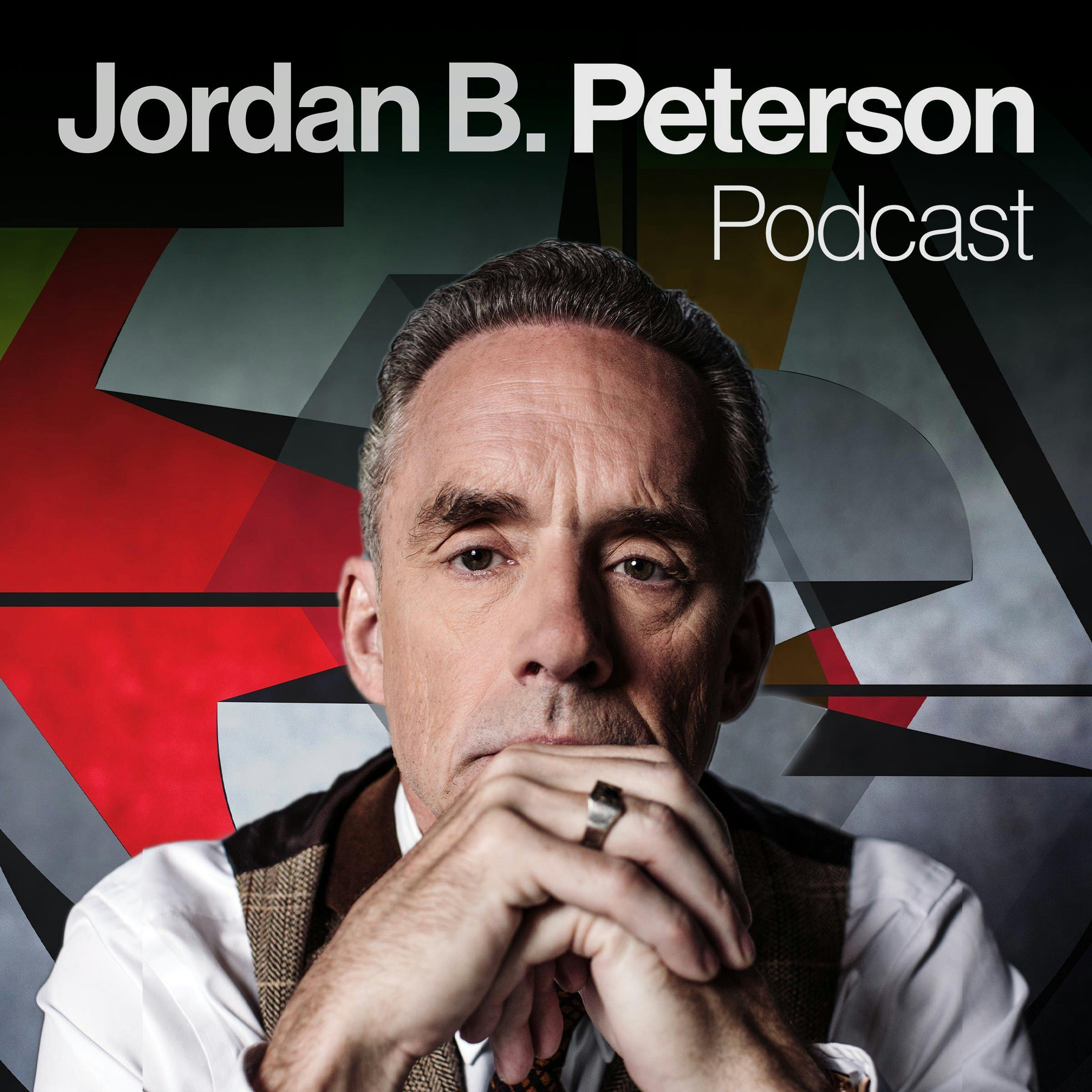
The Jordan B. Peterson Podcast
Dr. Jordan B. Peterson